"Press 1" Is Over: Why Guided Conversations Beat DTMF Menus
DTMF menus and hold queues cost time, patience and customers. Using real examples from Austria, this article shows why guided AI conversations make phone service more efficient, more user-friendly and more cost-effective.

Daniel Traut, Co-founder
4 min read
When the First Contact Is Already Frustrating
A familiar scene at Austrian companies:
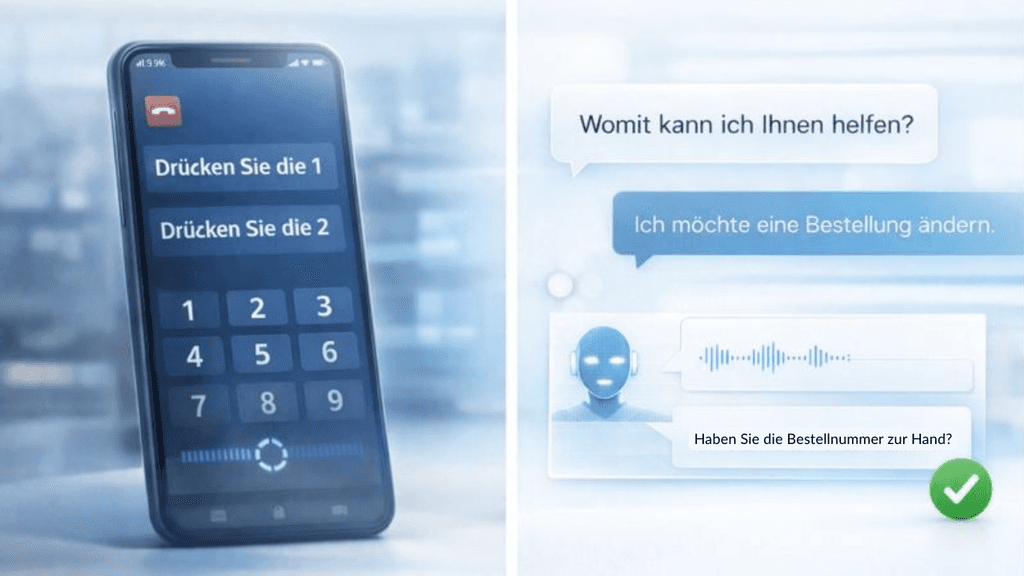
A customer calls, hears an automated voice and is led through a multi-level menu:
"Press 1 for sales, 2 for support, 3 for…"
Within seconds, it's clear:
The caller has to think, remember, wait and hope they picked the right key.
It gets especially bad when:
- the request doesn't clearly fit a category
- the caller has several issues at once
- the caller gets "lost" in the menu
What follows is often a hang-up or an annoyed person on hold.
DTMF Is Efficient for Systems, Not for People
DTMF menus were originally introduced to simplify internal processes.
For callers, though, they mean:
- no way to describe their request in their own words
- rigid categories instead of real clarification
- no confirmation that they're in the right place
In Austria, where the phone is still a key way to reach a business, this gap is especially obvious. People expect a conversation, not navigation.
Hold Queues Aren't Service, They're a Standstill
Classic hold queues are even worse than keypad menus.
Minutes of music, interrupted by messages like "Your call is important to us," now sound more cynical than reassuring.
In practice, that means:
- wasted time for the caller
- higher abandonment rates
- a poor first impression of the company
All this even though the actual request could often be resolved in a few sentences.
Guided Conversation: The Modern Approach
Guided AI conversations don't replace menus with chaos. They replace them with structured dialogue.
The difference:
The caller describes their request in their own words, and the system figures out where it belongs.
An example from an Austrian service business:
Instead of "Press 2 for billing," the caller says:
"I have a question about my last invoice."
The system recognizes the topic, asks targeted follow-up questions and either transfers the call directly or resolves the request itself. No detours, no keypad.
Why Guided Conversations Work Better
Guided conversations offer several advantages:
- Callers don't need to know anything, they just say what they need
- Follow-up questions clear up misunderstandings
- Requests can be categorized cleanly
- Conversations feel more natural
In Austria in particular, we see this:
A conversational approach comes across as more polite, more competent and more modern than any menu.
What We See in Practice Today
That's why modern AI phone assistants increasingly rely on conversational guidance rather than rigid menu structures.
The conversation follows a clear logic but stays flexible enough to handle real-world requests.
Solutions like Callana take exactly this approach:
Guided conversations replace keypad menus, and hold queues are reduced or eliminated entirely. Not through tech gimmicks, but through well-designed conversation flows and clear system logic.
Companies in Austria that rethink how they handle the first phone contact benefit in several ways:
- happier callers
- shorter calls
- lower abandonment rates
- better internal routing
In the long run, one thing is clear: Letting people talk instead of pressing keys earns you time, trust and quality.