What Is an Orchestra Layer, Really? An Old Idea, Newly Hyped
Orchestra layer: what's really behind the buzzword? We explain how companies have been orchestrating workflows for years, why n8n and Parloa already do it – and how Callana turns it into real automation.

Thomas Fartely, Product Development
8 min read

What Does "Orchestra Layer" Mean in Practice?
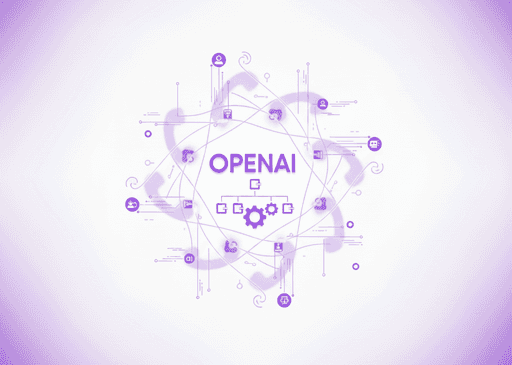
The so-called orchestra layer is the layer that connects systems, data sources and processes intelligently.
It makes sure every component of a digital infrastructure works together in a coordinated, synchronized and logical way – from APIs and databases to AI engines.
In essence, it's an orchestration layer:
- It understands which action should be triggered and when.
- It decides which systems are involved.
- And it makes sure information flows at the right moment.
The goal: a seamless flow between people, machines and software – whether in customer service, marketing or support.
Why the Term Is Older Than It Sounds
The hype around the "orchestra layer" is new – the concept behind it isn't. Years ago, integration tools like n8n, Make (formerly Integromat) and Zapier were already doing exactly that:
connecting systems, exchanging data, automating processes.
What's sold today as "intelligent orchestration" used to go by a simpler name:
workflow engine, middleware or automation platform.
The difference? Today, these workflows are enriched with AI logic and semantic processing. So the layer isn't new – it's just smarter.
From n8n to Parloa: Examples of Real Orchestration
A look at well-known systems shows that most modern platforms have had their own orchestration layers for a long time:
- n8n uses a modular node structure to sync data across hundreds of apps.
- Make offers a visual interface for mapping complex workflows – including branches, filter logic and API calls.
- Parloa orchestrates language logic, context and external data sources for real-time AI conversations.
- Cognigy, Voiceflow and similar systems seamlessly combine speech, data and intent recognition into a single conversation flow.
The takeaway: the "orchestra layer" isn't a product. It's a way of working that emerges wherever systems talk to each other.
| Platform | Focus | Orchestration type | Integration depth | AI capability | Ideal for | What sets it apart |
|---|---|---|---|---|---|---|
| n8n | Open-source workflow automation | Node-based logic with visual control | High – direct API connections, custom functions | Limited (via external AI APIs) | Developers, tech teams | Maximum flexibility through open source and self-hosting |
| Make | Visual process automation | Scenario-based mapping with conditional flows | Very high – more than 1000 integrations | Partial (via modules) | Agencies, SMBs | Strong visual representation of complex workflows |
| Zapier | Simple app connections | Linear "if-then" logic | Medium – focus on mainstream apps | Low | Solo entrepreneurs, startups | Fastest setup, lowest complexity |
| Parloa | Voice and chat AI platform | Intent-driven dialogue orchestration | Medium – API-based, CRM connections | High – proprietary NLP engine | Contact centers, voice projects | Strong AI orchestration for voice |
| Callana | AI phone assistant and workflow automation | Real-time orchestration across speech, logic and systems | High – deep CRM, calendar and data integration | Very high – adaptive AI conversations | Service providers, tourism, care, public administration | Combines voice AI and process automation in a single layer |
Why Suddenly Everyone Is Talking About Orchestration
The term is on everyone's lips right now because of the explosion of AI systems.
It used to be about moving data from one tool to another. Today, systems need to understand what that data means – and what action should follow.
That changes everything:
- The focus shifts from technical integration to intelligent control.
- Instead of static workflows, you need adaptive logic.
- AI is no longer just integrated, it's actively coordinated.
That makes the orchestra layer exciting again – even though its foundation is ancient.
*Relevant keywords:* ai orchestration, adaptive workflow, orchestra layer 2025, automation with artificial intelligence
How Callana Does Orchestration – Without the Buzzwords
At Callana, the orchestra layer isn't an abstract architecture. It's what we do every day.
Our AI phone assistant uses its own orchestration layer to connect speech, logic and data in real time.
When a call comes in, here's what happens:
- Understand: The AI analyzes intent and context (e.g., a booking, a complaint, a callback request).
- Decide: It picks the right flow – the "score" for the conversation.
- Act: Callana communicates with calendars, CRMs or internal systems and triggers the right actions.
The result is a seamless conversation – no waiting, no manual steps.
The real magic lies in the invisible orchestration layer that coordinates everything.
Hype vs. Real-World Implementation
Plenty of people talk about orchestration, but few implement it consistently.
In many cases, the "orchestra layer" stays a theoretical construct – nice on slides, but untested in practice.
At Callana, by contrast, every customer interaction is orchestrated in real time.
That means:
- The AI understands the context of the call.
- Data is processed instantly.
- Actions run without human delays.
The result: a smooth customer experience that sounds human – but is powered by technology.
Why Orchestration Will Shape the Future
Companies that don't orchestrate their systems lose speed.
Modern business processes already involve dozens of tools – and each one speaks a different language.
An orchestra layer translates, prioritizes and synchronizes.
That makes it the backbone of any scalable automation – whether for chatbots, phone AI or CRM workflows.
Callana shows what that looks like day to day:
Automated availability, intelligent call routing and natural communication – orchestrated by AI.
A working orchestra layer isn't a feature – it's what makes technology feel human. At Callana, it ensures every AI answer lands, every call gets through and every process keeps in time. That's orchestration as it was meant to be – efficient, human and buzzword-free.